Ageing & Ecology
Research intern at Sensing Old Age, anthropology project
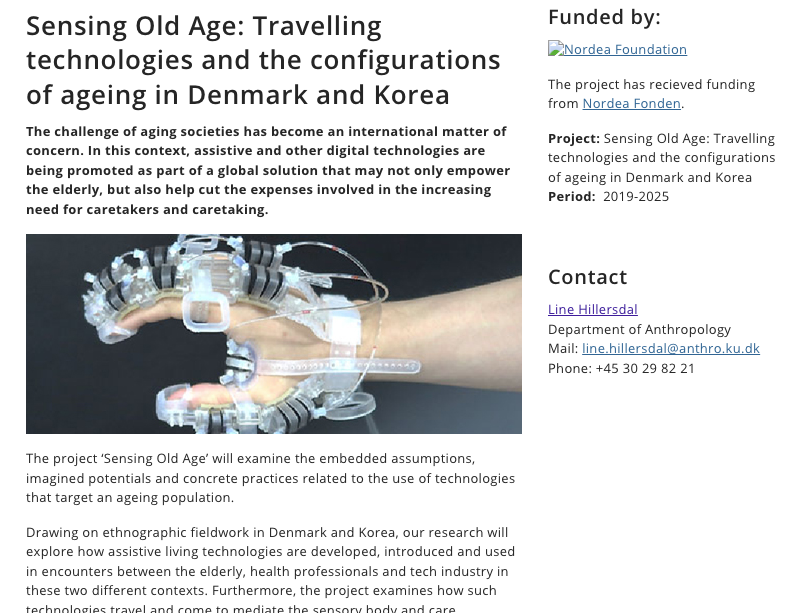

Fieldwork at Jinju Elder Day and Night Care Center
Preliminary Fieldwork at Wando Seaweed Farming Village (2022)
with an anthropologist, Kristina (DK)
Second Visit to Wando Seaweed Farming Village (2023)
In collaboration with an artist activist, Zeke (PH)
Essay Documentation of Ecology & Ageing


*Due to the unavailability of the Song of the Wind webpage, the original writing is temporarily shared here.
Grandma, Halmang(1) Amihan
By Yeongran Suh
“Auntie~ It’s me.”
“Well, look who’s here. Ya come to pick me up? How wonderful. Let’s go home.”
My aunt did not recognize me at first sight. But when she did, she got up and said that we
shall go back home, greeting me with the most pleasant look as if I came to pick her up. The social
worker at the care center sat her down, saying she couldn’t go home just yet. I stood from a distance
so as not to give her false hope. She eagerly waited to go back home during her entire stay.
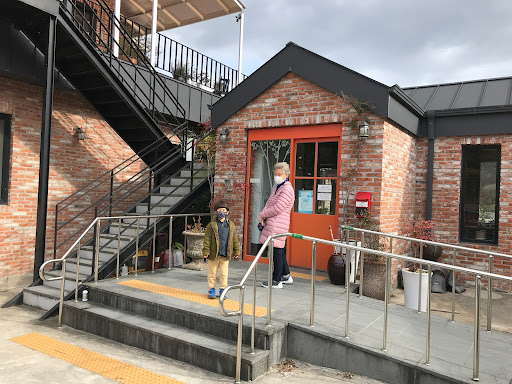
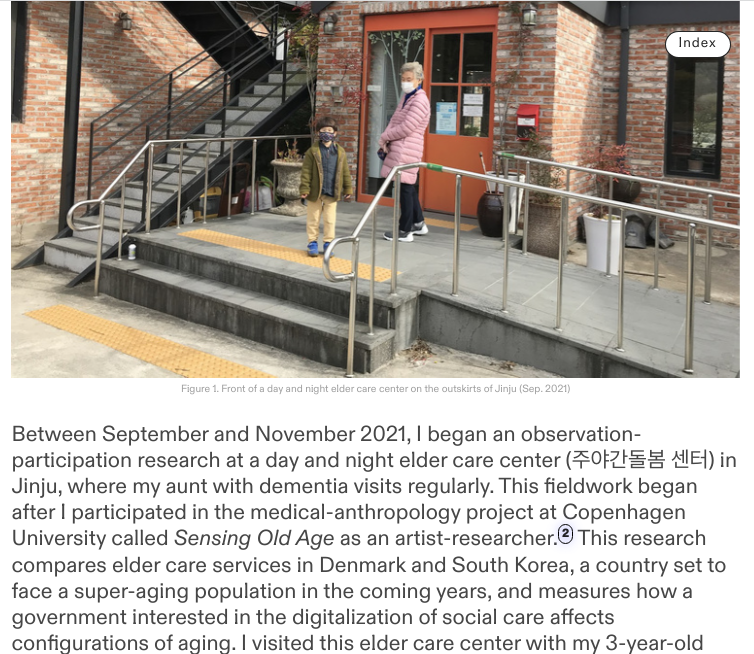
Figure 1. Front of a day and night elder care center on the outskirts of Jinju (Sep. 2021)
(1) Grandma in Korean is ‘Hal-meo-ni’. ‘Hal-mang’ is a Jeju dialect of grandma, simultaneously the name of Jeju
grandma goddesses. The original title of this essay is ‘Halmeoni, Halmang, Amihan.’ At the end of this essay, re
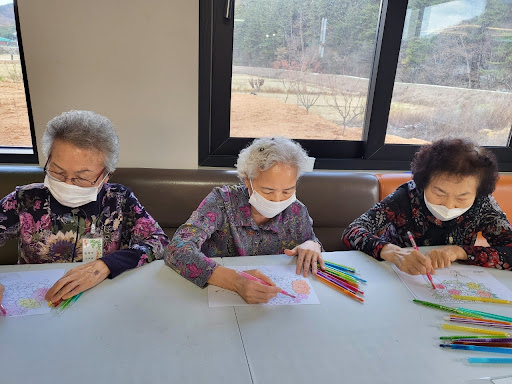
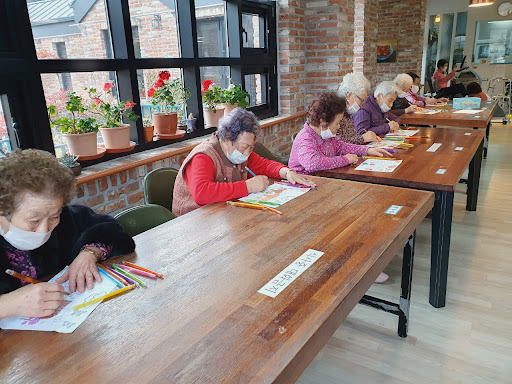
Between September and November 2021, I began an observation-participation research at a day and
night elder care center (주야간 돌봄 센터) in Jinju, where my aunt with dementia visits regularly.
This fieldwork began after I participated in the medical-anthropology project at Copenhagen
University called as an artist-researcher.(2) This research compares elder care
services in Denmark and South Korea, a country set to face a super-aging population in the coming
years, and measures how a government interested in the digitalization of social care affects
configurations of aging. I visited this elder care center with my 3-year-old son to experience Korea’s
elder care system and see the current state of service. Thanks to the social worker at the care center
who played with my child, whom I had no choice but to bring to this fieldwork, I was able to look
around the center and talk to the elderly women by butting in their conversation. They said that they
came here after becoming so ill that they could not keep living on their own, and they used to be wary
of this place at first. I, too, felt wary of this place, as I was used to seeing grannies chatting with their
neighbors while resting in a gazebo. The daily routine in the center looked very different from what
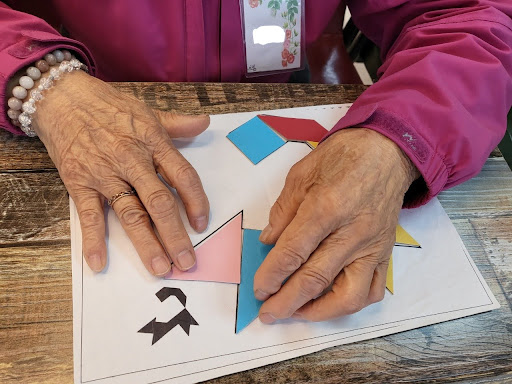
these women used to. Their schedule included morning exercise, problem-solving to improve memory
and cognitive abilities, coloring seasonal drawings, and mealtimes with snack times in between. As
they had to do completely different activities from what they used to; they also had to establish new
social connections with those completely unrelated up until now. A question popped up in my head.
‘What might an ideal setting for these older folks to enjoy their final years look like? How would I
want to spend my later years… If I was them?’
(2) Medical-Anthropology Project , https://anthropology.ku.dk/research/research-projects/current-projects/sensing-old-age/
Figure 2. Cognitive activities for the elderly at the care center
In times like today, when society consists mostly of nuclear families whose members work
tirelessly day and night, the burden of taking care of the elderly in the family falls squarely on the
shoulders of an individual, unlike in the past when village communities and extended families were
still prevalent. This is why the care service provided by the government is almost quintessential in
easing their burden. Due to this necessity, the Korean government operates a long-term care service
for the elderly (장기요양보험서비스), and this day and night care center is a part of said service.
The social workers in the care center operating under government permission took care of the elderly
without any long holidays while having to understand their familyhood and circumstances. Despite all
this, as elderly care was transferred to the national sector from the village and extended families, an
inevitable friction felt unfamiliar within our bodies. I kept thinking about what my auntie, who was
losing her memory, said. “Let’s go home.” Her words seemed to embody the friction.
“That’s what we think about our late years. It’s all gonna go downhill from here…”
Media researcher Maria Edström said in Nordic-Korea Connection Program
held in Västerås, Sweden, in April 2022. Maria was researching “ageism,” where the image of the
elderly fabricated by the media becomes reproduced and distributed, eventually leading to
discrimination on a daily basis. She suggested that while the elderly can be sporadically seen in media,
their roles and opinions are left blank, and elderly women are almost absent.
Maria showed me a Swedish folk painting from the 18th century to illustrate that our image of
the elderly was more akin to this painting. The painting depicts life in linear time, with people going
upwards during youth and downwards during their twilight years. It embodies the perception that
youth is upward ascension and old age is downhill with loss. Based on this perception, the changes in
our aging body and mind are something to improve and train upon instead of a blessing. The moment
I saw the painting, I was reminded of various indigenous mythologies where life and death were
expressed as an infinite circle that kept engaging each other. Image sequences like the moon waning
and waxing and waning again, and spring becoming winter and back to spring again. Is it possible to
think of aging and years beyond like a circular cycle? Can we bless our changing body and mind
brought about by aging?
Figure 3. Winter Carl Hansson, ‘Kurbits,’ (1799)
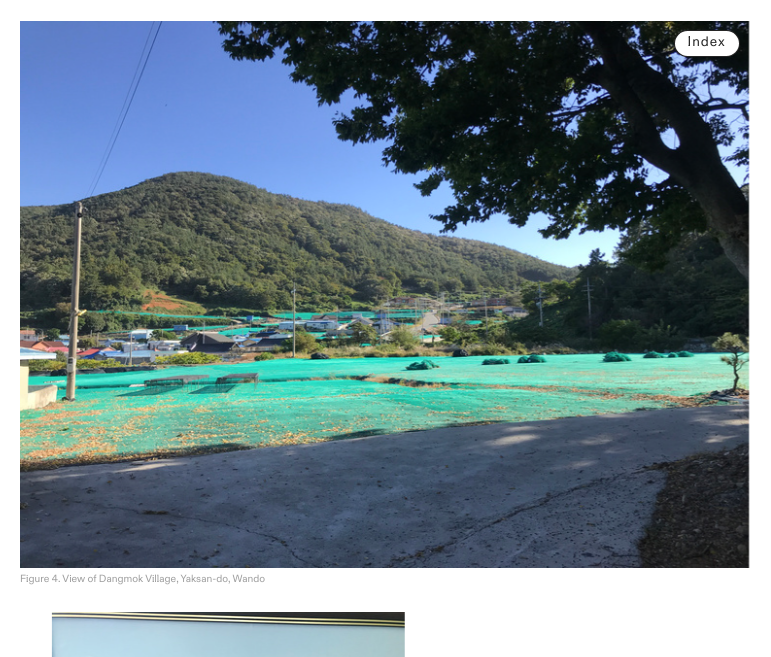
“I like growing old here. This is my home. The scenery and the air is so nice here.”
That was the answer I got from an elderly woman who was walking around the mountain in
Yaksan-do’s Dangmok Village when I asked her ‘How does it feel like to grow old on this island?” It
was also a question I asked myself after my visit to the elder care center in Jinju. How do we want to
live out our later years?
I first visited Yaksan Island in Wando in October 2022, when I participated as an artist during the
preliminary field trip for the project. Accompanying me was the anthropologist
Kristina from the project. We naturally became interested in the lives of the
elderly in Yaksan-do, as Kristina met with the elderly at a care center in Denmark’s Æro Island and I
have done that in Jinju. The elderly who came out for a walk in the local mountain in Dangmok were
satisfied with their lives on this island. They said they were happy with their lives thanks to the clean
environment, good neighbors, and pensions, which were just enough to get by, if not paltry. The
elderly woman’s face was smiling throughout the entirety of our conversation. We decided to visit
the Village Hall that the elderly woman visits daily because we wanted to interact with her more.
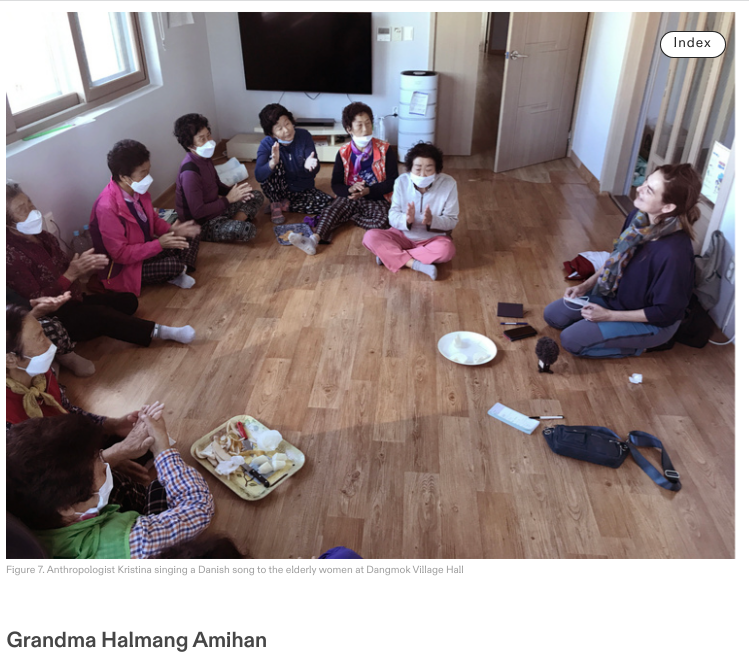
The elderly women started coming into the village hall one by one at around 2 pm, just after lunch.
They put on some trot music program on the television and sang along. Some were playing hwatu (a
Korean variation of the card game “Hanafuda”), with a bystander offering unsolicited advice. We
asked them what they do with their lives. They seemed to spend their days in a similar fashion. They
cook food in the morning, do chores, tend to the vegetables in the garden, get therapy from the local
physiotherapy center, go for a walk in the mountains, or meet up with other elderly women in the
village hall after lunch. Then they go home for supper and rest, watch television, and sleep.
These women knew every bit of detail about each others’ schedules and circumstances from
their time spent together. They would keep an eye out for the grandma living alone, giving out
necessities and keeping track of sore parts on each others’ bodies. By peeking at each other’s homes,
these elderly people keep an eye out if someone falls ill. This type of care is called ‘elderly-on-elderly
care (노노케어),’ and it directly shows a facade of a super-aging society.(3) Dangmok Village elders
who are too ill to go out receive visiting home care services provided by the government. However,
this service set off an unexpected phenomenon. Elderly women stopped visiting those who started to
receive visiting home care services. I thought that this too, was a sort of regional friction caused by
the government’s top-to-bottom operations and changes.
(3) Quoted from an interview with secretary general Kim Jonghwi of social coop , an organization in charge of long-term care service in Wando area (Chunghae Welfare
Foundation, Oct. 2022)
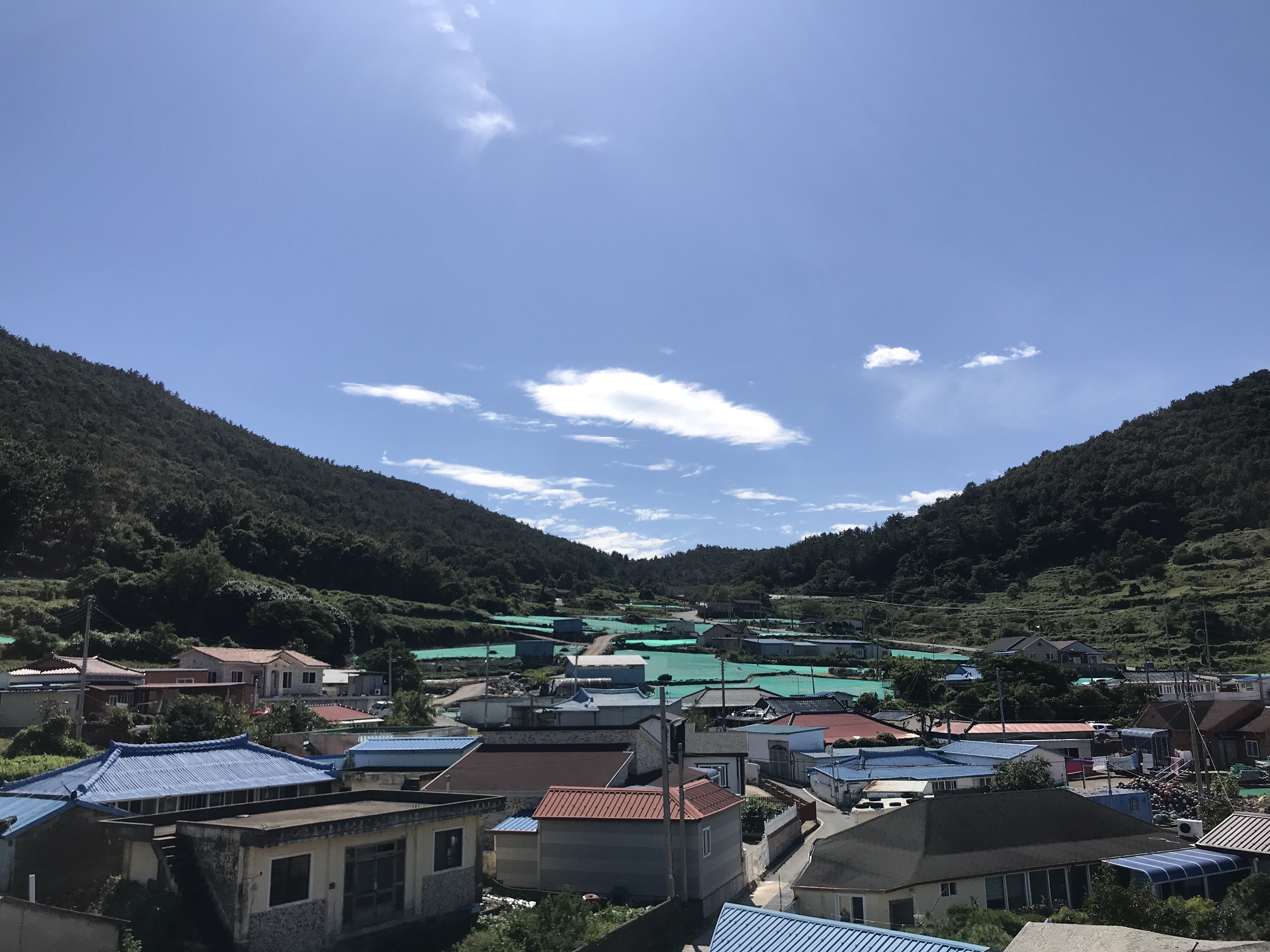
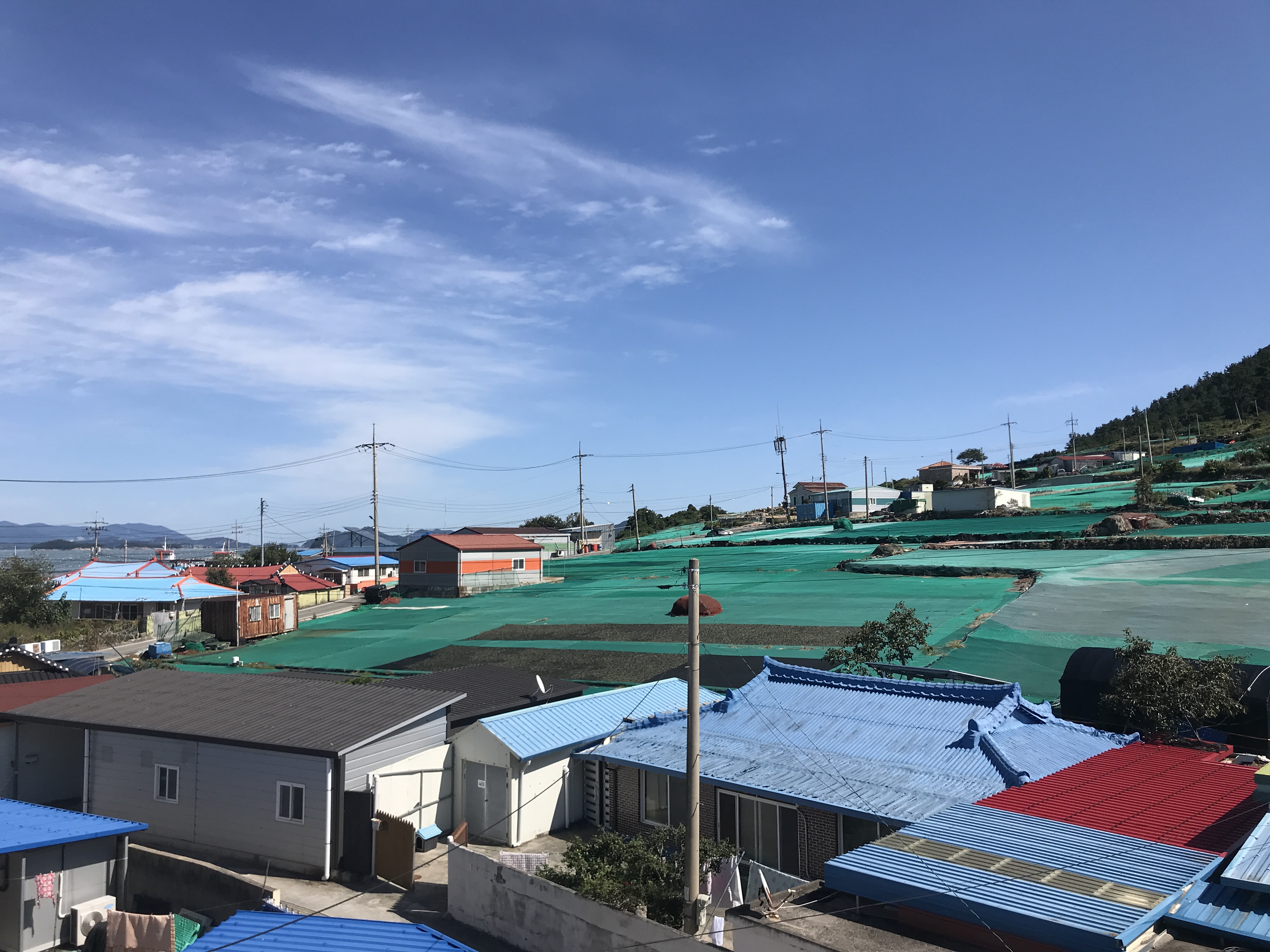
Figure 4. View of Dangmok Village, Yaksan-do, Wando
Figure 5,6. Photo hung on the Dangmok Village Hall, which was taken from a group travel / Current
household status board of Dangmok Village
I could feel a deep bond between the elderly women who visit the village hall. While such a
bond may be due to living with each other for their entire lifetime, it was also because they all share a
lifetime of labor with each other as well. They all began kelp and seaweed farming at a very early age.
Most of the households in Dangmok Village have made their livelihoods through fishing or kelp and
seaweed farming. What was especially fascinating was that the entire village commonly owned the
coastal area dedicated to kelp farming. The head of the ‘fishing village fraternity’ (어촌계) allocates
ocean area according to how much area a household’s labor force can cover. The allocated area may
be passed on to the farmers’ children should they wish to succeed in their family’s work, but it must
be returned if the farmer wishes not to continue with seaweed farming. The area is distributed
sporadically as a shared village asset, not as a personal ownership. This practice stemmed from the
traditional perception that “coastal waters in front of villages are our waters,” which was combined
with the modern legal system to form fishing village fraternities. (4) Not only do village fisheries seek
common economic profits and amass social capital through shared resources, but they also allow
shared social and cultural activities.5 This can be observed from the shared leisure activities of
Dangmok Village’s elderly women.
(4) Park Chulhwan. (2019). Referenced pg. 1-2 (5) Shared resources and labor are tied to community’s beliefs and socio-religious rituals. In my article (2021), I discussed the situation in which a community loses not only its social, cultural, and religious activities, but also its very life as a result of the loss of shared labor.
This shared resource is akin to indigenous societies where people guard forests together and
gather just enough berries and vegetables to redistribute resources in the field. In the research on
Borneo’s agriculture and forestry, I observed the phenomenon where a tribe became plagued by strife
and wealth disparity after the notion of personal ownership of capitalism and commerce shattered
shared land. (6) It seems that Dangmok Village still has the notion of a shared ocean despite the
industrialization and mechanization of the fishing business and strikes a balance between shared and
personal assets.
Shared resources and solidarity of the villages have another kind of social influence. Every
adult in the family used to participate in kelp farming before aging in the fishing village started to take
effect. Younger children would play while the adults were working or even help them out. Official
workspace and private childcare space were not separate, meaning work and child-rearing were not
divided. Also, men and women were involved in every step of the seaweed farming process. This
shared labor and childcare do not enforce the burden that has demanded invisible labor and care on
one specific gender. Therefore, in those circumstances, the socio-economic status of men and women
is bound to be flat.7
(6) Referenced various cases such as Dove, Michael R., Percy E. Sajise, and Amity A. Doolittle, eds. (2011).
(7) The socio-economic status of women in agricultural areas where both genders worked together has reduced due
to industrial mechanization. Refer to Partasasmita, Ruhyat, et. al.(2019) for an example of this phenomenon.
Figure 7. Anthropologist Kristina singing a Danish song to the elderly women at Dangmok Village
Hall
Grandma Halmang Amihan
The bond and care between elderly women at Dangmok Village allowed me to imagine my
ideal twilight years and care community, regardless of the old age model provided by the government
in this super-aging society. It was about this time when I was contacted by Zeke (Joshua Ezekiel
Sales), who was a resident artist participating in the project. He requested a
meeting with me after reading my article (2021), which was about the
transformation of traditional agriculture. After a few online meetings, Zeke invited me to collaborate
with him, which I accepted with much enthusiasm. My now 5-year-old son and I headed to Yaksan-do
in September of 2023, full of anticipation for the collaboration with Zeke. A native Filipino, Zeke
talked about the parallel histories of the Philipines and South Korea and the farmers and laborers who
were crushed under the two countries’ dictatorships and economic development projects. We planned
a performance to summon Princess Baridegi (바리데기), a goddess of the underworld tasked with
leading the souls of the dead, in order to relieve these people of their agony and sorrow. Zeke also
taught me about an entity that connects Wando’s coastal waters to Jeju and beyond Jeju to the
Philippines through the Pacific. She was the goddess of wind who flew straight to the Philippines via
Jeju Island. The Yeongdeung Wind brought by Yeongdeung Halmang (Yeongdeung grandma
goddess,영등할망), the harbinger of Jeju’s spring and rejuvenator of all creation, and Amihan, the
summer wind that cools the Philippines, was one and the same.
We carried out the entire ritual on October 2nd atop Sammun Mountain near Dangmok
Village. We drew constellations connecting invisible beings in between Korea and Philippines and
gathered goods to summon our gods. We performed a meta-ritual where Zeke transformed into the
bleeding spirit of a farmer, while I transformed into Princess Baridegi, who will carry his soul. Later,
we headed to the cliffs of Sammun Mountain and spread the seeds on the coastal waters of Wando
with our audiences as a remembrance of Yeongdeung Halmang, who will bring us new lives.
Figure 8, 9. From a performance with Zeke / Photo credit: Wan Chantavilasvong)
After a long journey, meeting my aunt at the care center in Jinju, the image of the elderly I
encountered at Västerås, and the elderly women at Dangmok Village Hall, I faced Princess Baridegi
and Yeongdeung Halmang back in Yaksan-do. It is uncanny how both are goddesses, with one being
the deity of the underworld reliving tortured souls of the dead from their sorrow and the other
grandma goddess being the harbinger of spring after a long, dark winter. This reflects how Korean
society of yore regarded women and grandmothers. Besides, look at how a grandma is the harbinger
of spring, not a young, beautiful, or even a fertile goddess. This perception shatters the modern
prejudice that old age is their decline, loss, and end, as shown in the 18th century folk painting.
Grandmother is a being of ‘regeneration,’ who bring warmth and make living beings come to life
again after the ‘end’ where everything has disappeared. Beings who take care and hold us in their
arms. It’s not so surprising when we think of our similarities. We all came from our grandmothers.
Men, women, binary, and non-binary people came from their mothers, who came from their own
grandmothers. My mother’s egg, which allowed me to enter this world, the seed could have been
made inside my grandmother’s womb.
The myths of Princess Baridegi and Yeongdeung Halmang take us to the circle of life curving
the end of the linear life of a person aging and sailing towards death. The goddess of the past has
come back to us in our present. In our multi-layered temporality, where the past, present, and future
are all intertwined, she keeps returning to our projections of re-imagining our desirable future. I
overlap these goddesses’ warm, regenerative care with the community care of Dangmok’s elderly
women. The coastal waters shared by the elderly women in Dangmok and their solidarity are marked
on the map where we imagine our future as elderly people and our desirable care community. We
remember and imagine time and time again through these stories. We patch up these awkward cracks
in our lives like a grandmother, with her deeply wrinkled and thick hands, slowly, yet skillfully, one
tear at a time. These tasks are stored in our sewing kits.
Figure 10. Coastal waters of Wando, as seen from Sammun Mountain. The waters extend to Jeju Island, which
connects to the Philippines through the Pacific
*This essay was written as a connection of experiences, starting from 2021 Medical-Anthropology
project from University of Copenhagen, 2022 Nordic-Korea art connection 2022 preliminary field trip for the project in Yaksan Island, Wando, 2023 <Song
of the Wind> project, and 2024 (TBA) Future Reproduction and Care Making Project, . I would
like to express my gratitude to Kristina Grunenberg, Line Hillersdal, curator Oh Sunyoung, Korea Arts
Management Service, Jeollanam-do Cultural Foundation, Joshua Ezekiel Sales for supporting me throughout
this experience, and the elderly women at Dangmok Village Hall, the elderly women and social workers at the
day and night care center in Jinju, and Chunghae Welfare Foundation for participating in our interview.
Bibliography
Dove, Michael R., Percy E. Sajise, and Amity A. Doolittle, eds. (2019). Beyond the Sacred Forest:
Complicating Conservation in Southeast Asia. Duke University Press.
Hansson, Winter Carl. (1799). Kurbits, https://no.m.wikipedia.org/wiki/Fil:Kurbits_1799.jpg
Park, Cheol-Whan. [박철환]. (2019). A Study on the Fishing Village Fraternity in Korea 우리나라
어촌계에 관한 연구(석사학위논문), Graduate School of Management and Public Administration of
Mokpo University 목포대학교 경영행정대학원.
Partasasmita, Ruhyat, et. al. (2019). Impact of the green revolution on the gender’s role in wet rice
farming: A case study in Karangwangi Village, Cianjur District, West Java, Indonesia, Biodiversitas,
Vol. 20, 1, 23-36.
Suh, Yeong-Ran. (2021). Rice, Ritual, and Spirits: The possibility of plural and sensory approach to
Traditional Agricultural Knowledge, Critical Reading: Functional Dissonance, Project Seven and a
Half, 65~8
 yeongransuh.com

You must be logged in to post a comment.